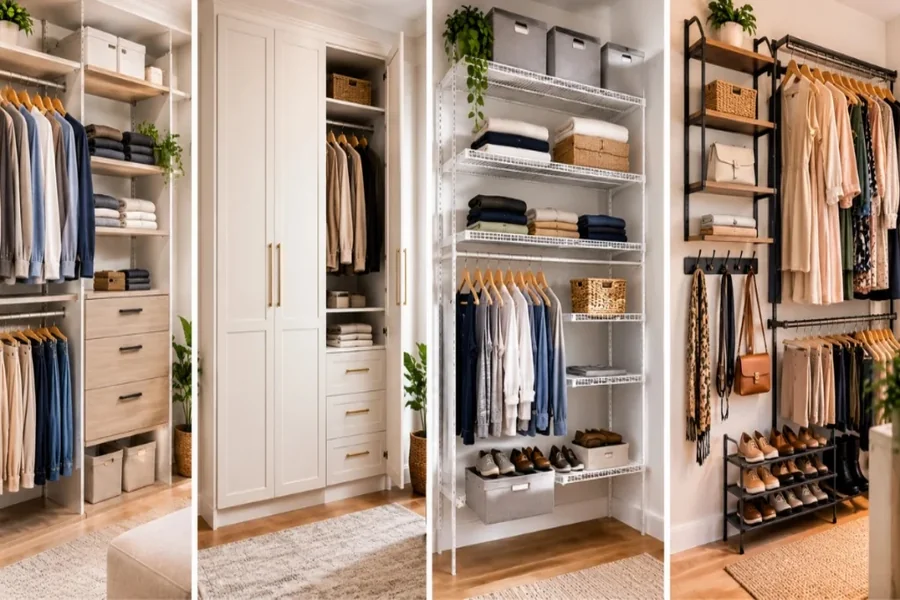
Knowing how to organize a small closet can make a person’s everyday life so much easier, and they’ll be able to make use of the room they have that is already there. Too many clothes, accessories, and a cluttered closet can make it hard to find clothes, store accessories and keep the closet neat and tidy. Fortunately, you don’t have to own a ton of clothes or have a costly storage solution to have a tidy space. There are a few things that can be done in practical ways to make your closet more organized, to utilize the vertical space, and to make it easier to maintain the space.
Even if you’re in a room with a small closet, a narrow closet, or lack of space in your apartment, there’s a solution that can make a difference. The secret is to get rid of all the superfluous things, categorize items by type and assign each a designated spot.
1. Empty Your Closet and Declutter Your Clothes
The first thing to do when learning how to organize a small closet is to remove all the items from there. This can be a bit of an inconvenience, but a blank closet will give you an idea of how much space you have and what you need to get rid of. It also simplifies the job of cleaning the shelves, corners and hanging rods.
After you’ve gotten everything out of the closet, divide your possessions into groups. Piles of clothing can be made to store clothes that are often worn, clothes which are not worn often, seasonal clothes, and clothes which are no longer needed.
Be honest about what belongs in the closet. If you don’t wear a shirt anymore, it doesn’t fit anymore, or you keep it around in case you need it someday, think about whether it is worth keeping. If you actually need special occasion clothes, keep them, but don’t hang on to clothes that you have no use for and don’t take up any room.
Donate, sell or recycle textiles through appropriate programs. Any clothes that require fixing can go in a different pile and then you can make a decision about whether they’re worth fixing or not.
Wipe down the surfaces of the closet after decluttering and allow to dry before returning items. A clean starting point makes the steps ahead easier and makes you create a system that will last.
2. Use Vertical Space to Create More Storage
The best trick for organizing a small closet is to utilize space above and below the clothes. There are unused spaces around the ceiling, under hanging clothes and inside the doors in many closets. These areas can be used to give additional space without the need of a bigger wardrobe.
First, examine the already available shelves in your closet. If you have a considerable amount of space between the top shelf and the ceiling, consider installing another shelf for items that aren’t used daily. Folded sweaters, handbags, storage boxes or seasonal accessories can be stored on extra shelves.
Another useful accessory are hanging organizers. They can store T-shirts, light-weight trousers, scarves and other small articles that could otherwise get in all sorts of piles. Belts, accessories and smaller items can be organized over a door, if there is sufficient clearance to ensure a proper closing.
Stackable storage bins on the top shelf or bottom of the floor can also be used. Pick containers that are within the available dimensions and do not result in wasted space. Labels make it easier to locate items and clear bins make it easier to identify stored items.
Keep in mind that vertical space for storage should be able to be reached and secured. Store items within easy reach by eye level and store light seasonal items on higher shelving. Do not stack heavy boxes on top of each other, particularly if frequently accessed boxes are on top.
3. Choose the Right Hangers and Organizers
How much room is available in the closet can be impacted by the product you use. Too large hangers, storage containers that are too large, and bulky baskets can consume precious space. It’s better to select a few appropriate organizers than to overload your closet with accessories.
The first step is to use slim hangers. Many slim designs will use less space along the hanging rod than thick plastic or wooden hangers. Consistency can also be achieved with your hanger since you can browse the clothing in your closet more easily with the same type of hanging.
Drawer dividers and small fabric bins will help keep piles of folded clothes from becoming confused. Consider using one divider for socks, another for underwear and a third container for workout accessories. The idea is to ensure that each category is easily identifiable with no excess information.
Before purchasing anything, measure your closet. Measure the width of the shelves, the depth of the wardrobe and the space for hanging clothes. This helps you to make sure that you are not purchasing items that do not fit.
One of the easiest ways to do this is to make a comparison of the storage choices before you make a decision on which one works for you. Identify one or two practical solutions then try to see if they help you improve your routine. It is possible that with just a few slim hangers and one shelf divider you can find the solution to most of your storage issues.
Don’t purchase organizers just because they look good. All products should have a specific function. Anything that consumes more closet space than it saves is probably not a good fit for your closet.
4. Arrange Clothes by Category and Frequency of Use
After cleaning out the closet and getting your system for storage in place, make a decision on how each item is to be stored. You will know where the clothes are quickly and put them away when you have them neat in an organized manner.
Start by sorting the items together. Shirts go with shirts, trousers with trousers and dresses with dresses. If necessary, you can also break these down further, whether it’s by separating out workwear and casual wear or short sleeves and long sleeves.
Next, arrange your clothes according to how often you wear them. Outfits for everyday should be easily accessible, and clothes used for special occasions can be kept further back or on a less accessible shelf. If there is suitable storage, seasonal items, such as bulky jackets for winter can be put in labelled containers elsewhere during the warmer months.
Another option is the ability to coordinate the colors. If you have a lot of various outfits that are alike, it’s easier to look through your closet if you have them in order. This step is not required though. Beginners may find a simple classification based system sufficient.
Fold clothes that will not be hung, including many T-shirts, pajamas and casual trousers. Folded objects should be stored in small or manageable stacks or folders vertically arranged in drawers to make it easy to view each object without having to lift an object stack.
Aim to have a bit of space between groups of clothes. It can be hard to keep a closet organized even if it seems that everything is in place at first.
5. Make Small Closets Easier to Maintain
The function of an organized closet won’t work if it’s not organized. The good news is it’s not essential to clean the closet every week if it’s small. Some regular routines will help you avoid clutter again.
The first rule of the thumb is to use one-in, one-out, when possible. When you acquire a new shirt, pair of trousers, etc., think about giving away an old shirt or pair of pants. This will stop your collection from becoming too large for the space you have.
Second, put laundry back where it belongs after washing and/or wearing. Do not put clean laundry on the bed, chair or closet floor for several days. When you put things away quickly, you’ll have a neat room and won’t have to spend as much time later.
Take five to 10 minutes weekly to do a closet audit. Straighten hanger, refold messy piles, return missing accessories, etc. Remove empty packaging. These little chores can stop little hassles from becoming big hassles.
It’s also a good idea to check your closet when you start planning outfits for the new season. Store clothes that will not be used for a while in appropriate locations and store seasonal items that will be used soon. When storing clothes for a few months, ensure that the clothes are clean and absolutely dry.
Last, but not least, listen to your use. When there are clothes that haven’t been used in months, question their place. Your closet should work for you, not the other way around.
Final Thought
Learning how to organize a small closet isn’t about getting more space, it’s about using the space that you already have well. A practical and easy-to-use closet can be achieved by decluttering excess clothes, organizing clothes vertically, using the right hangers, and having a category system.
It’s not necessary to perform all of the changes in a day or to purchase a lot of storage products. Clear out your closet, save only for essentials and create a home for them. Do not add organizers unless they address a true problem.
Most important, form simple routines that will help you keep the arrangement. Spend time putting clothes away regularly, check through your wardrobe every s
FAQs:
- How do you organize a small closet with limited space?
Use slim hangers, shelf organizers, storage bins, and vertical space to keep clothes and accessories neat without overcrowding your closet.
- How can I make my small closet look bigger?
Keep the closet tidy, use matching hangers, choose light-colored storage containers, and remove items you no longer wear to create a more open appearance.
- What should I remove when organizing a small closet?
Remove clothes that no longer fit, damaged items, duplicates, and accessories you rarely use. Donate or recycle suitable items to free up valuable space.
- How do I maximize vertical space in a small closet?
Install additional shelves, use hanging organizers, add hooks to the inside of the door, and store seasonal clothing in labeled bins on higher shelves.
- Are slim hangers good for small closets?
Yes, slim hangers take up less space than bulky plastic or wooden hangers. They help you hang more clothes while keeping them organized and easy to access.