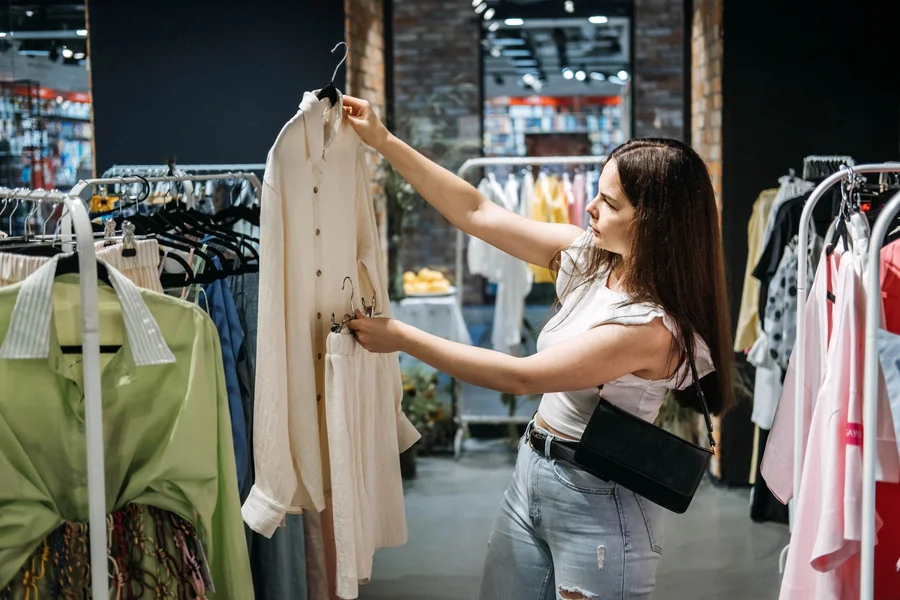
Don’t let yourself feel bad or confused about the clothes that you buy. This fashion shopper’s guide to sustainable fashion will help you to make your fashion wardrobe you love, without wasting and without regrets.
A sustainable fashion shopping guide assists you in purchasing fashion items that last longer, are made of better materials and are from the more responsible brands. Purchase fewer items and quality should be the main consideration. Look at fabric labels, find out the source and how things are made, and seek trustworthy certificates. Consider secondhand first. Take care in washing clothes and fix them when necessary. Decide on the right piece with less amount of money, than a perfect piece that costs you too much.
Why You Need a Sustainable Fashion Shopping Guide
Fashion impacts on people and the planet. Water, energy and raw materials are used to produce garments. Dyeing and finishing of chemicals may be used. The situation of some workers in global value chains is poor; low wages and unsafe working conditions. Garbage that has been tossed after just a few uses adds to landfill.
A good fashion buying guide is a sustainable fashion shopping guide, which will help you to avoid the marketing hype and focus on what matters. Need not be perfect. The only requirements are good habits.
Step 1: Check What You Already Own
The ideal outfit is an outfit that you already have in your wardrobe. This is all good sustainable fashion shopping guides start from.
Check out how this simple audit can be done:
- Eliminate all and then separate into: ‘Wear often,’ ‘Wear sometimes,’ and ‘Never wear.
- Give reasons for omitting some pieces. It’s fit, comfort or colour?
- Tweak/fix near optimal system(s).
- Know about the genuine voids – a coat, pair of work shoes.
The basis for an outfit closet is a small set of garments which can fit into one another easily. It also helps prevent impulse buying.
Step 2: Learn Which Fabrics Are Better
Fabric choice shapes a garment’s footprint, durability, and care needs. No fabric is perfect, but some options are better for certain uses.
| Fabric | Why It Can Be a Good Choice | Watch Out For |
| Organic cotton | Grown without synthetic pesticides | Still needs water to grow |
| Linen | Made from flax, strong and breathable | Wrinkles easily |
| Hemp | Durable and softens with wear | Can feel stiff when new |
| Lyocell (e.g., Tencel) | Made from wood pulp, often in a closed-loop process | Check the brand’s sourcing |
| Recycled polyester | Uses existing plastic waste | Sheds microfibers when washed |
| Wool | Long-lasting and naturally warm | Animal welfare and sourcing practices |
| Conventional polyester | Cheap and durable | Fossil-fuel based and sheds microplastics |
Fabric is only part of the story. A well-made jacket worn for ten years can beat a flimsy organic shirt worn twice. Keep this in mind as you use this sustainable fashion shopping guide.
Step 3: Shop Secondhand First
Purchasing used helps prolong the life of already existing clothes. It’s frequently the easiest one of the sustainable fashion shopping guides.
A good place to start:
- Thrift and charity shops
- Social media reselling apps and consignment shops can also be of assistance when it comes to selling unwanted products.
- Exchange clothes with others or groups within the community.
- The rental services are for one-off events.
Be honest and let them know the things you need. Any piece of clothing that you don’t wear is waste, even if it is just a thrifting.
Step 4: Research Brands Before You Buy
Look for brands that share clear information about their factories, materials, and worker conditions. Transparency is a good sign. Silence is a warning.
Here are common labels you may see. Each covers a different issue, so none tells the whole story.
| Label | What It Generally Covers |
| GOTS (Global Organic Textile Standard) | Organic fibers, with environmental and social criteria |
| OEKO-TEX Standard 100 | Testing for harmful substances in the finished product |
| Fairtrade | Fair pay and working standards, mainly for cotton farmers |
| Bluesign | Chemical and resource management in textile production |
| Global Recycled Standard (GRS) | Recycled content and supply chain tracking |
| B Corp | Overall social and environmental performance of a company |
You can also check whether a brand publishes a supplier list, repairs its own products, or offers take-back programs.
Step 5: Spot Greenwashing
Greenwashing is when a brand insists it is green when it isn’t. It should be a must to find it in any sustainable fashion shopping guide.
Keep an eye out for the following symptoms:
- Any terms that are not clearly and precisely defined, like ‘eco’, ‘green’ or ‘conscious’, that are not backed up by any details.
- On top of it, a single ‘green’ collection from a predominantly fast fashion brand.
- Claims that are not specified as a percentage are not counted as recycled.Claims that don’t mention a percentage are not recycled.
- No information about manufacturer of clothes
- What does work better here and does it have any evidence?
Step 6: Check Quality in the Store
Durability is an important element of sustainability. When it tears, it’s not sustainable even if it says so on the label.
Quick quality checks:
- Seams: Pull gently. The stitching should be even and tight.
- Fabric: Hold it up to the light. Very thin cloths may have a limited life.
- Secure buttons and smooth linings: Check for secure buttons and smooth linings.
- Fit: If it doesn’t fit you then it will not fit your “diet”!
Also take into account the cost per wear. Divide price by the number of occasions on which you plan to wear it. A $100 coat worn 100 times costs $1 per wear. Each shoe has a value of $10 when worn, because a pair of $20 shoes are worn twice. Here are some examples of things you can do to ensure you are buying sustainable fashion.
Step 7: Care for Clothes So They Last
Just as crucial as buying clothes is caring for them and keeping them in good condition.
- Don’t use hot water, and wash less often.
- If possible, leave to air dry.
- For synthetics, use a laundry bag or microfiber filter.
- Follow care labels.
- Take care to repair small tears and loose buttons as soon as possible.
- Customize almost fit items.
The following habits can save money and waste.
A Sustainable Fashion Shopping Guide for Every Budget
It’s not about having an excessive amount of cash to get a better deal.
Budget is tight – emphasis on second-hand, swaps and repairs. Buy fewer items.
Mid Budget: Select some good value items such as jeans, coat, shoes and wear them for a long time.
Greater budget: Purchase from transparent brands that have good repair options. Keep to a minimum purchases of necessary items.
Common Mistakes to Avoid
- Moving away the perfectly good clothing for new “eco” clothes.
- In line with all trends, which equals a fast turnover
- The quizzes are entirely based on one word and the detail is omitted.
- Just buying it when it is ‘on sale’
- Not paying attention to fit, comfort and ‘as it is’
Simple Pre-Purchase Checklist
Record this list of sustainable fashion shopping items on your cell phone. Ask yourself:
- Do you have to use this?
- Will I wear it 30 or more times?
- Does it include at least 3 outfits I own?
- Is the construction well built, of high quality?
- Are the brand’s messages clear?
- Will it need a lot of work to take care of?
If the majority of the answers are yes, it probably is a good purchase.
Final Thoughts
Having a sustainable fashion shopping guide as a rule book is better than as a habit. There are not all the questions that you will be able to answer correctly.
Use what you have. Seek quality, and be wary of overselling and consider purchasing used. Maintain clothes to wear for a lifetime.
Pick 2-3 of these steps from this sustainable fashion shopping guide and start this week! In time you will have a closet filled with clothes that are economical, environmentally friendly and the clothes you want to wear!
FAQs
What is the first step in a sustainable fashion shopping guide?
Start with your own wardrobe. Know what you own, what you wear, and what is missing before you buy anything new.
Is secondhand clothing really more sustainable?
Usually, yes. It keeps existing clothes in use and reduces demand for new production. It works best when you buy only what you will actually wear.
Are natural fabrics always better than synthetic ones?
No. Natural fibers can have high water or land use, and some synthetics last a long time or use recycled content. Durability, sourcing, and how long you wear the item all matter.
How can I tell if a brand is greenwashing?
Look for vague claims without data, missing supplier details, and tiny “green” lines from otherwise high-volume brands. Trusted third-party certifications and open reporting are better signs.
Is sustainable fashion always more expensive?
Not always. Some items cost more upfront, but secondhand shopping, repairs, and long-lasting pieces can lower your cost per wear.
Can a sustainable fashion shopping guide work on a small budget?
Yes. The biggest steps cost little: buying less, shopping secondhand, swapping, mending, and caring for clothes properly.