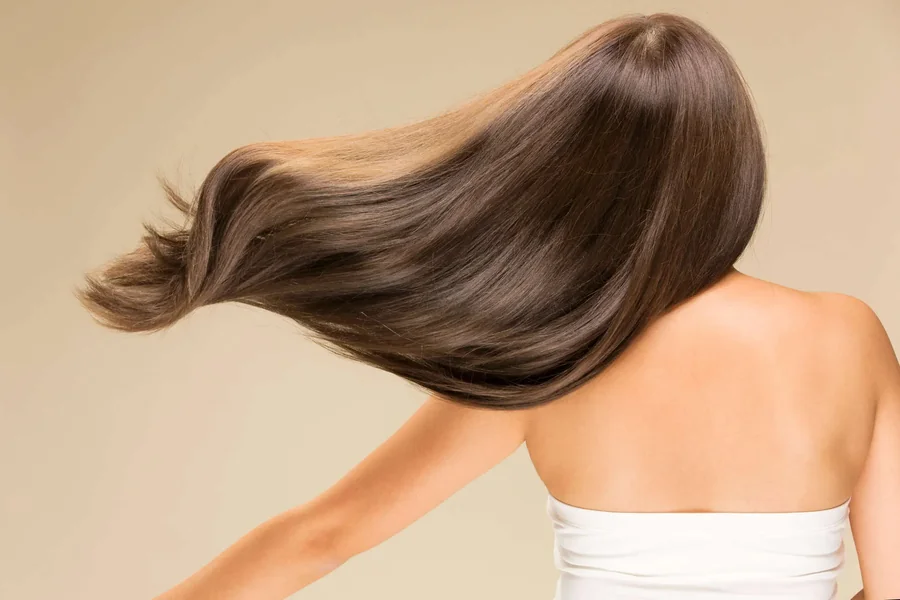
The first step to the best hair care routine for any type of hair is to understand what kind of hair you have, and what kind of scalp you have. Straight hair requires regular, gentle washing and wavy hair balanced moisture. Curly and coily hair requires soft washing and abundant moisturizing. Lightweight products work best on fine hair and thicker products on thick hair. Use scalp oil to wash, condition lengths, and avoid heat.
Hair care is not a one-size fits all situation. Products designed to enhance straight hair could weigh down fine hair or dry the curls. Hence a hair care regimen for various types of hair is of great importance.
This guide will help you determine your hair type, and provide you with some easy steps to build around it.
Why Your Hair Type Changes Everything
The shape and growth pattern of your hair follicles determine your hair type. Roulery follicles give straighter hair. Strands that are more oval-shaped from which curlier ones grow.
This shape influences the way that scalp oil (sebum) flows down the hair. Oily products glide down straight hair and the roots will feel oily without harming the ends. Oil can be a problem on curly hair as it does not glide into all the curls, and the curls may feel dry.
Thus, a haircare routine for each hair type can’t be the same for everybody. Whether it’s texture, thickness or type of scalp, all of these can influence the type of hair that requires the attention of application.
How to Find Your Hair Type
Check for three parameters: texture, thickness and scalp.
- Straight: A texture that has no curl.Wavy: A texture that has a slight wave. There are so many people who have mixed hair, wavy roots and curly ends.
- Thickness: Fine strands are thin and soft. Medium strands are average. Coarse strands are thick and strong. This is for every strand, not for the amount of hair.
- Skin: Oily, dry or balanced. Observe the feeling of the roots one or two days after washing.
One other thing you can try is to test the porosity of your hair, or how well it absorbs and retains moisture. Fast absorption and rapid drying of hair may indicate high porosity. If the hair does not absorb the water and does not become wet easily, then it may have low porosity. The popular “float test” done in a glass of water is not very reliable, so observing the behavior of the hair during washing is a better indication.
Quick Hair Type Overview
| Hair Type | Common Traits | Main Need |
| Straight | Shiny, oils up fast, little volume | Light cleansing, volume |
| Wavy | Loose “S” shape, can frizz | Balanced moisture, frizz control |
| Curly | Defined spirals, often dry | Deep hydration, gentle handling |
| Coily | Tight coils, fragile, shrinks when dry | Heavy moisture, protection |
The Basic Steps in Every Routine
All hair care regimens for various hair types have the very same foundation. Products and frequency of product usage are the only things that change.
- Cleanse: Take away product build-up, oil and sweat.
- Color: Enhance color and color drain.
- Protect: Heat protectant & rough handling avoided.
- Treat: Use masks or serums to give extra care to hair when needed.
- Trim: Avoid split hair by cutting split ends every 8-12 weeks.
Haircare Routine for Different Hair Types: Texture-Based Steps
Straight Hair
Straight hair tends to get oily easily and can appear flat as well.
- Wash 2-4 times a week depending on your scalp.
- Only condition mid-lengths and ends with a light conditioner.
- If the roots get greasy, use dry shampoo in between washes.
- Don’t use dense oils or butters around the roots.
- Clarifying shampoo should be used approximately every other week to keep the buildup away.
Wavy Hair
Wavy is placed in between the straight and the curly. Requires moisture, but if weight is too great it may flatten the waves.
- Shampoo 2-3 times week using a mild shampoo.
- Condition from the middle to the end.
- Apply a light mousse or cream to wet hair to tame frizz.
- Gently scrunch and air dry/diffuse.
- Do not brush dry hair as it will cause frizz.
Curly Hair
Curly Hair needs more moisture and less washing, as it tends to be dry.
- Wash 1 to 3 times a week or alternate shampoos with co-washing (conditioner).
- Combing with a wide toothed comb while the conditioner is in your hair.
- Apply a leave-in conditioner to wet hair and a styling cream/gel.
- Air dry curls with minimal handling.
- Use a satin pillow case or satin bonnet to sleep on.
Coily Hair
Coily hair is the most fragile as the bends are tight and can easily break and oils are not easily able to penetrate.
- Shampoo 1-2 times a week, or as often as once a week if your scalp is fine.
- Deep condition weekly.
- Use layers of products to moisture-trap, for example, a water-based leave-in and then an oil or a butter.
- Practice gentle handling of hair, preferably moistened and conditioned.
- If your hair needs to be pulled back into styles, do so, but don’t pull too tightly at the line of the hair.
Adjusting for Strand Thickness
The thickness of hair types should also be taken into account when formulating a haircare plan.
It is very easy to have fine hair weighed down. Use volumizing shampoo and light conditioner. Avoid using heavy creams and oils.
Richer products can be used on thick or coarse hair. Apply mask and conditioner weekly as they will be creamy. Don’t forget that thick hair will take longer to dry, too.
Match Your Routine to Your Scalp
Your scalp should guide the washing part of any haircare routine for different hair types. Two people with the same curl pattern can need very different wash schedules.
| Scalp Type | Typical Wash Frequency | Helpful Tip |
| Oily | Every 1 to 2 days | Use a gentle clarifying shampoo weekly; condition ends only |
| Balanced | 2 to 3 times a week | Stick to a mild shampoo |
| Dry | 1 to 2 times a week | Use a moisturizing shampoo; avoid very hot water |
| Flaky/dandruff-prone | As directed on the product | Try shampoos with zinc pyrithione, ketoconazole, or selenium sulfide |
If flaking, itching, or redness lasts despite proper care, see a doctor or dermatologist. It may be a scalp condition that needs treatment.
Special Care for Colored or Damaged Hair
If you color, bleach or frequently heat style your hair, the approach you use to take care of your hair will need to be adjusted and additional repair steps will be necessary for various types of hair.
- Follow the instructions on the shampoo with color-treated hair.
- Use a heat protectant before using a blow-dry or hot tool every time.
- Once a week, use a deep conditioning mask.
- Balance moisture and protein. Excessive protein in the diet can cause hair to become stiffer and excessive moisture can cause hair to become limp.
- Use luke warm water and not hot water.
A Sample Weekly Schedule
Here’s a straightforward weekly regimen to follow for various types of hair that you can personalize. Adjust the number of wash days according to your hair.
- Wash day 1: Shampoo, condition and style as normal.
- Mid-week: Use dry shampoo (straight), water and leave in (curly and coily), or a light cream (wavy).
- Wash day 2: Shampoo and condition. Do a mask or deep conditioner if your hair feels dry.
- Every two weeks: Use a clarifying shampoo.
- Every 8-12 weeks: Cut ends.
Common Mistakes to Avoid
Avoid these mistakes when following a haircare routine for different hair types:
- Too frequent or infrequent showering. Both can wreak havoc on your scalp.
- Applying conditioners to the head. This may lead to greasy roots.
- Taking extremely hot baths. Can dry scalp and hair.
- Roughly brushing wet hair. Wet hair is more fragile.
- Over-use of products. Buildup is a weight that dulls hair’s shine.
- Skipping heat protection. Recovering from regular heat damage is difficult.
Choosing the Right Products
Read labels, rather than take your word for it. Lightweight formulas are good for fine and straight hair. Moisturizing, cream, and rich formulas are most effective for curly, coily and thick hair.
If you’re developing a haircare regimen for various hair types, get one shampoo, conditioner and one styling product. If you have the need for more, then add it. Try one product at a time to determine which is successful.
Climate matters too. Hair frizzes more in humid weather, so products that prevent frizz and seal the hair are helpful. In dry weather, moisten with additional water.
Final Thoughts
No one-size-fits-all regime exists. The ideal haircare regimen for various hair types is one that is respecting your hair texture, thickness and scalp.
Start simple. Shampoo from scalp; condition hair lengths; protect from heat; wash with care. Then tweak based on the response of your hair.
Watch for indications of dryness, greasiness or breakage. They let you know what you need to alter. Any type of hair can be healthy and feel good with patience and a few well-chosen products.
FAQs
What is the frequency for washing hair in hair care routine for various hair types?
Inhibited by the texture and nature of your scalp. Oily and straight hair might require a wash every 1-2 days. Hair that is curly or coily may require washing every 7-14 days. Go by the oil level of your scalp.
Is it safe to use the same shampoo on all types of hair?
A mild shampoo can be used for most types of hair, but it’s best suited for a shampoo that works for you. For instance, hair that is fine, dry or curly should opt for different products than hair that is volumizing.
Should I not condition my hair?
For the majority of individuals, yes. Conditioner helps hair to become softer, less tangle and breakage. Even oily hair needs conditioner to the tips.
Should my hair have wavy top and wavy bottom?
Intermingled textures are very common. Apply lighter products at the roots and richer products at the ends; refer to the tips for your most dominant pattern.
Do people with various hair types have to spend a lot of money on haircare?
Not necessarily. A basic routine requires just a good shampoo, conditioner and one style or protective product. Just apply masks and serums as necessary.
When will I have results?
Changes such as softness and reduced frizz can be seen after a couple of washes. Improved growth and decreased breakage may take a couple months. It takes time to grow a good hair and consistency is the key.