Hair dryers, flat irons, or curly/wavy wands are all used in a variety of hair care regimens to dry, curl, or wave hair. But if you’re exposed to high temperatures on a regular basis, your hair may be dry, rough, frizzy and more prone to breakage. Knowing how to protect hair from heat styling can help you have healthy-looking hair without sacrificing your favorite styles. It all depends on treating the hair appropriately, selecting the right products, the right temperature, and refraining from over heating the hair. Some simple transformations can help minimise damage and maintain smooth, tangle-free, easier-to-manage hair.
Why Heat Styling Can Damage Your Hair
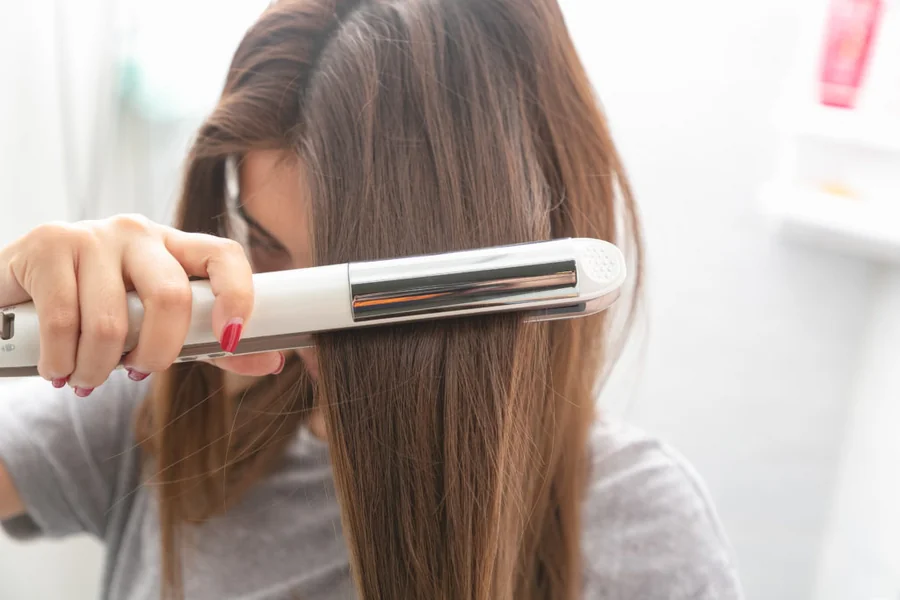
Heat styling alters the shape and structure of your hair without permanently changing it. A flat iron straightens the strands, and a curling iron makes waves or curls. Hair dryers are designed to dry out any excess moisture and assist in shaping your hair. While these tools can be helpful, when not used properly they can cause the hair shaft to become weakened over time.
This outermost layer of the hair, called the cuticle, can be damaged by high temperatures. This layer can be frizzy or damaged, causing hair to lose moisture more readily and look dull. Split ends, more frizz, tangle, breakage can also be observed.
Several factors such as your hair type, the temperature your styling tool is set to and how often you use the tool, will determine the amount of damage. Sometimes chemically treated, bleached or damaged hair will require special attention. Dry and brittle even thick hair can be caused by excessive heat.
The good news is, you don’t need to give up heat styling altogether. Rather, concentrate on safer techniques and to make heat protection a habit.
Use A Heat Protectant Before Styling
Using a heat protectant is one of the most crucial things to do to protect hair from heat styling. These products are intended to counteract the effects of heat on your hair by creating a barrier between the strands and the heat, as well as by spreading out the heat.
Heat protectants can be used as sprays, creams, serums or lotions. This is dependent on the type of hair and style you are looking for. Sprays that are lightweight work well on fine hair as they don’t weigh it down. Thick, coarse, and curly hair might benefit from creams and lotions that provide additional moisture and control.
If using, adhere to directions for use. Spread evenly from the middle to the ends of the hair, which is more likely to be dry and damaged. Apply before blow-drying if it is suggested on the directions to do so on wet hair. For dry hair, there are some products that are specifically formulated to be used before a flat iron or curling wand.
Keep in mind that heat protectants will help decrease damage, but won’t prevent it. They do not warrant the use of the highest setting, or the making of the same cuts over and over. Use them with less heat and correct technique for additional protection.
Choose the Right Temperature for Your Hair Type
Another important aspect of hair protection is using the right temperature. People often think that greater heat equals greater results, but if it’s too much heat, it can cause unnecessary damage. In most instances it’s better to use the lowest effective setting.
It is important to note that the perfect temperature for your hair will vary according to the type, condition and thickness of your hair. Thinning and damaged hair usually requires less heat than thick, coarse hair. Hair treated with chemicals, or bleached is also more sensitive and needs special attention.
As a general rule, the lower the temperature the better it is for hot tools:
- Thinning or fragile hair: Begin at 250-300°F (120-150°C) and add more heat as necessary.
- Medium or natural hair type: Use around 300-350°F (150-175°C).
- Thick or coarse hair: For these types, a setting between 350-375°F (175-190°C) can work well.
The following are suggestions, not rules. There will be some hair types that might require lower temperature, and there isn’t any hair that is 100% safe to set. Don’t always set the tool to the highest position possible.
You should also take into account how long the heat comes in contact with each part. Gradually ironing over the same section a few times makes ironing that area more. Rather, tackle small parts and make more gentle movements. If your hair still doesn’t react at a lower temperature, then the technique or cut is probably wrong so turn the heat down before increasing it again.
Dry Your Hair Properly Before Using Hot Tools
Flat ironing or curling wet and/or damp hair can lead to serious damage, particularly if the iron or wand is not intended for wet hair. The trapped water within the hair can quickly get hot and cause weak points in the hair, increasing its susceptibility to breaking. In most traditional hot tools, hair should be thoroughly dry before applying the tool to the hair.
Moisten hair with a soft microfiber towel or cotton T-shirt by gently squeezing out excess water. Don’t rub hard as hair is more likely to stretch and break if damp. Use an appropriate leave-in product or heat protectant as directed.
When using a hair dryer, set the heat to a medium setting and make sure the dryer is constantly in motion instead of in one place for a prolonged period of time. Keep it a comfortable distance from hair and scalp. The use of a nozzle attachment can assist in directing airflow and in control.
Another way to keep the heat time to a minimum is to let the hair air-dry a little before blow-drying it. After complete drying, flat iron or curling wand can be used if necessary. This basic change will definitely make a difference in your styling regimen.
Build a Hair Care Routine That Reduces Heat Damage
Your hair protection isn’t confined to the salon when you take your hair out of the salon. Your usual hair care routine is of great importance in maintaining hair strength, softness and control. By maintaining a few consistent habits, the effects of repeated heat exposure can be reduced.
Use a shampoo that is appropriate for your hair type and scalp. Follow with a conditioner to give more softness and less tangliness. If your hair is dry, you may want to try a monthly hair mask, or as directed on the bottle.
Conditioning can help restore the health and usability of your hair, but it is not a permanent solution for severely damaged hair. In the case of split ends, cutting them off is the most sure-fire method to get rid of the split ends.
Avoid frequent use of hot tools. You can straighten your hair for any special event and go with a braid or bun or leave it in its natural state on days when you’re not going for a special occasion. If you give your hair a break from heat-styling from time to time, you will not be exposing it to the heat as often, and it will be easier to achieve and maintain your desired look without hot products every day.
You can check out this resource on hair care from the American Academy of Dermatology for more everyday hair care tips.
Other useful tips include sleeping on a soft pillowcase, detangling gently, and abstaining from knots and bunny tails which strain soft strands. If you color, bleach or chemically straighten your hair on a regular basis, take extra precautions with heat because you may be creating more damage than you are already.
Common Heat Styling Mistakes to Avoid
While using good products, some bad hairdo’s can spoil the game. These are some of the common mistakes you should avoid making to obtain better results, with less stress on hair.
Over-heating: Don’t always go for the highest heat, that’s not always the best option. It is best to begin at the lower end and gradually add as needed.
No heat protectant: If you don’t use an appropriate protectant, exposure can cause damage during the styling process. Use the product according to the directions on the label.
Repeat styling on the same area: This means that your hair is exposed to more heat with each pass. Work in small portions, make steady movements.
Hot tools on wet hair: If the hair isn’t dry, be sure to use a tool that’s intended for wet hair.
Not paying attention to damage: If dryness, roughness, breakage and split ends persist, your routine may be too harsh. Minimize heat application, and be careful.
Damaged styling tools: Inspect your flat iron, curling wand and dryer often. Styling might be less predictable due to uneven heating, damaged plates or faulty temperature controls.
There are subtle changes you can do that will give you a similar result with less heat. There is no need for a complex procedure or a huge array of products to effectively take care of your hair.
Final Thought
Preserving hair from harsh household appliances is really a matter of making better choices – not eliminating your favorite hairstyles. Always use an appropriate heat protectant, select the lowest temperature necessary and ensure your hair is dry before applying traditional hot tools. These combined with regular conditioning, gentle handling and periodic heat breaks.
Above all, listen to your hair. If it becomes more dry, brittle, and/or harder to handle, decrease exposure to the heat and change your routine. While it is important to use healthy products before you style your hair, it is equally important to care for your hair on a regular basis. These methods can be incorporated into your everyday routine to help maintain your hair’s strength and manageability over time, and will leave you with straight, wavy or curly styles.
FAQs:
- How can I protect my hair from heat styling?
Use a heat protectant before styling, keep your tools at a suitable temperature, and avoid applying heat to wet hair unless your tool is designed for it.
- Is heat protectant necessary every time I style my hair?
Yes, it is best to use a heat protectant whenever you use hot styling tools. It helps reduce heat-related damage, dryness, and breakage.
- What temperature is safest for heat styling hair?
A temperature between 250°F and 300°F may be enough for fine or damaged hair, while thicker hair may require more heat. Start with the lowest effective setting.
- Can heat styling damage hair permanently?
Repeated heat styling can damage the hair shaft, leading to dryness, split ends, and breakage. Since the visible hair shaft cannot repair itself completely, prevention and trimming are important.
- How often should I use heat styling tools?
Try to limit heat styling to a few times per week or less, depending on your hair’s condition. Allowing your hair to air-dry and rest between styling sessions can help reduce damage.